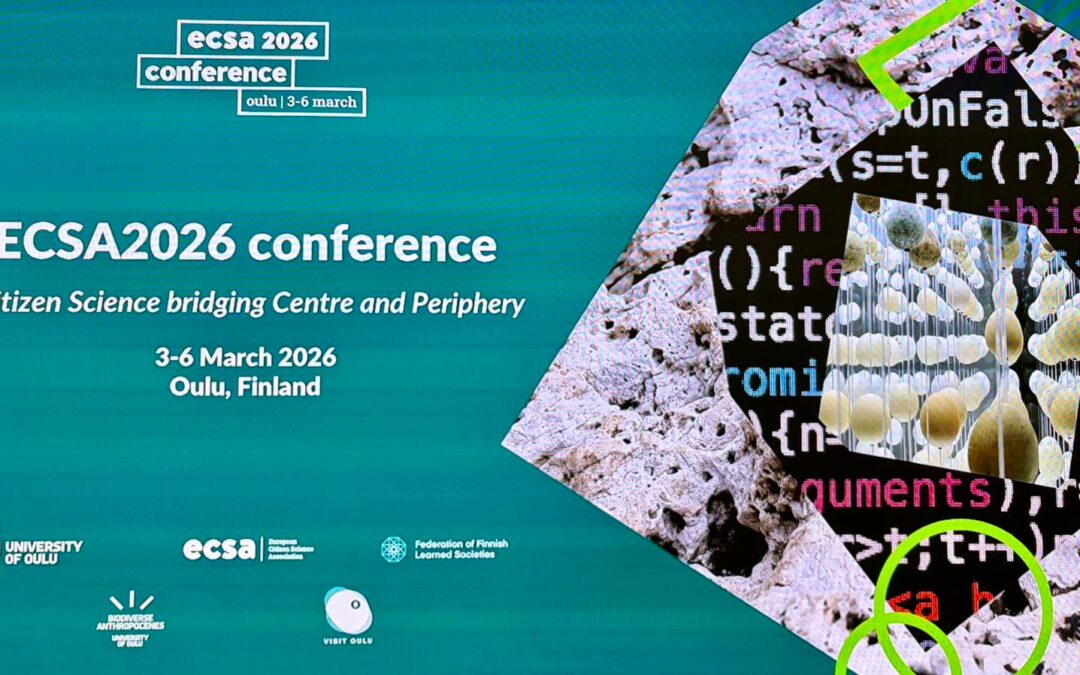
The ECSA 2026 Conference was a great opportunity to ri-connect with the vibrant Citizen Science community and exchange ideas on how to strengthen the impact and inclusiveness of Citizen Science initiatives.
One of the highlights was the panel on marine citizen science, which showcased a rich diversity of perspectives, experiences and approaches. The discussion also provided a valuable occasion to share about our project PartArt4OW. We met new people a nw venue to promote participatory art and science can work together to foster marine literacy and deepen people’s connection with the ocean.
On Friday, T6 Ecosystems actively contributed to the session on impact assessment and inclusiveness in Citizen Science, organised by the ECSA Working Group on Impact Assessment where our Head of Research Antonella Passani is vice-chair. The discussion addressed a key challenge for the field: how to assess the inclusive impact of Citizen Science without turning participants into objects of study, particularly when engaging with marginalised communities.
The exchanges highlighted several important aspects:
- the necessity to reflect on the pros and cons of qualitative, quantitative and art-based methods in impact assessment;
- the importance of embedding impact assessment as a reflexive tool to continuously improve Citizen Science activities;
- different science–policy interaction approaches that can help maximise political and societal impact.
The session also provided an opportunity to present the IMPETUS impact assessment methodology and share preliminary results emerging from ongoing work.
Events like ECSA 2026 continue to show how collaboration between research, communities, policy and creative practices can strengthen the future of Citizen Science.